A surgical instrument that has been disinfected but not sterilized may still be capable of spreading lethal diseases. This is not just hypothetical; this is exactly why hospitals have very rigid protocols for the reprocessing of every piece of equipment that comes into contact with patients. Understanding the difference between sterilizing vs disinfecting is foundational to infection control.
In general practice, the terms sterilize and disinfect are generally used interchangeably. However, within clinical environments, misusing either of the terms is a major infection control breach. The primary distinction between sterilizing and disinfecting relates to the ability of spores to remain alive after treatment. In the case of surgeries, intensive care and invasive procedures, the distinction represents the difference between a successful outcome and a hospital-acquired infection.
This article explains the details of sterilization versus disinfection. Included in the information provided are definitions, application levels, which methods apply to specific applications, and the reasons that an effective, commercially available process is critical in the medical and commercial cleaning industries.
Sterilization: The Complete Elimination of All Forms of Microbial Life
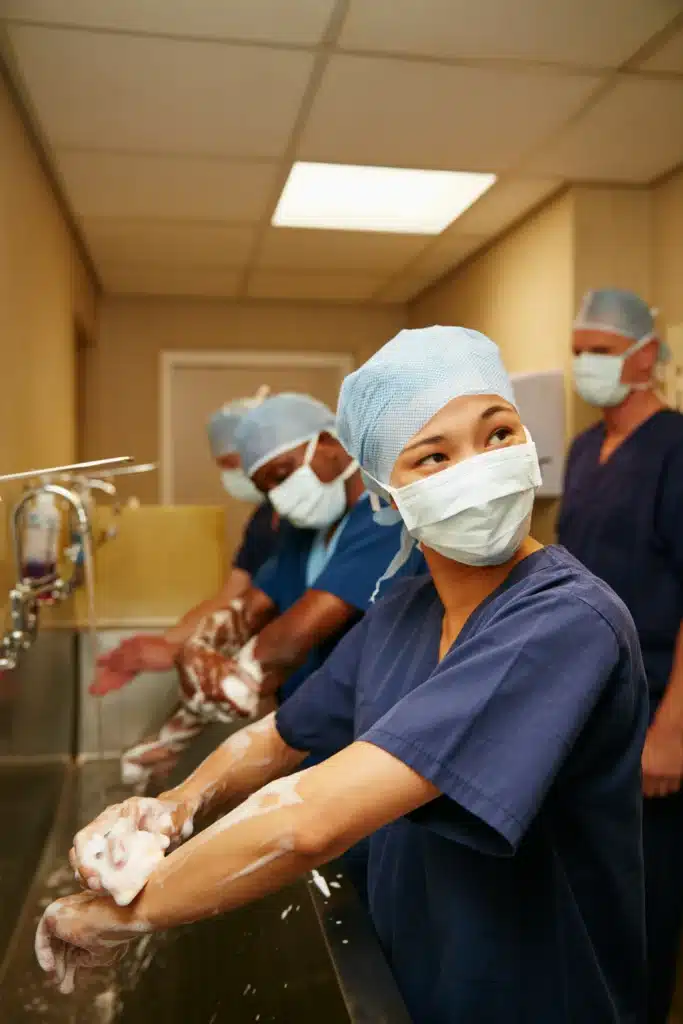
Sterilization is defined as the total elimination of all forms of microbial life. The sterilization process destroys all bacteria, viruses, fungi, protozoa and – importantly – all bacterial spores. No living organisms exist after a sterilization process has been completed. This is what separates sterilization from disinfection at the most fundamental level.
The sterilization process is distinguished by the fact that spores represent the most resilient type of microbial life. Spores can survive against disinfectants such as alcohol, standard disinfectants, boiling water and years of dormancy. The sterility assurance level (SAL) is established by the healthcare industry as the maximum number of viable microorganisms that should exist after the sterilization process has been completed. The SAL is a 1 in 1,000,000 (10⁻⁶) probability of viable microorganisms remaining in existence after the sterilization process has been completed.
All medical instruments and devices that come into contact with sterile tissues or the vascular system must undergo sterilization. There is no alternative to sterilization for these items – no matter how fast, expensive, convenient or otherwise. This is a CDC and FDA compliance requirement, not a recommendation.
Sterilization Techniques Used in Healthcare
There are several sterilization techniques commonly used in the healthcare industry. Each technique is best-suited for a particular type of equipment:
Autoclaving uses pressure steam sterilization to achieve sterilization quickly and economically and without toxic emissions. Autoclaving is the most widely used sterilization technique and is applicable for heat-tolerant medical equipment.
Ethylene Oxide (ETO) is another commonly used sterilization technique. ETO is effective for heat sensitive medical equipment but requires lengthy aeration periods. As a result of recent EPA actions, ETO is becoming less frequently used.
Hydrogen Peroxide Plasma (VH2O2) is being increasingly used as a lower temperature alternative to ETO. VH2O2 was recently FDA-approved as a substitute for ETO in certain medical equipment sterilization applications.
Dry heat sterilization is applicable for items that tolerate extreme heat but cannot tolerate moisture. Although dry heat sterilization is slower than autoclaving, it does provide effective sterilization.
Chemical Sterilants: Long-Term Immersion in FDA-Cleared Agents
Chemical sterilants are used for semicritical heat-sensitive items that require sterilization instead of HLD. Examples of chemical sterilants include glutaraldehyde and peracetic acid.
Disinfection: Killing Most Types of Pathogenic Microorganisms
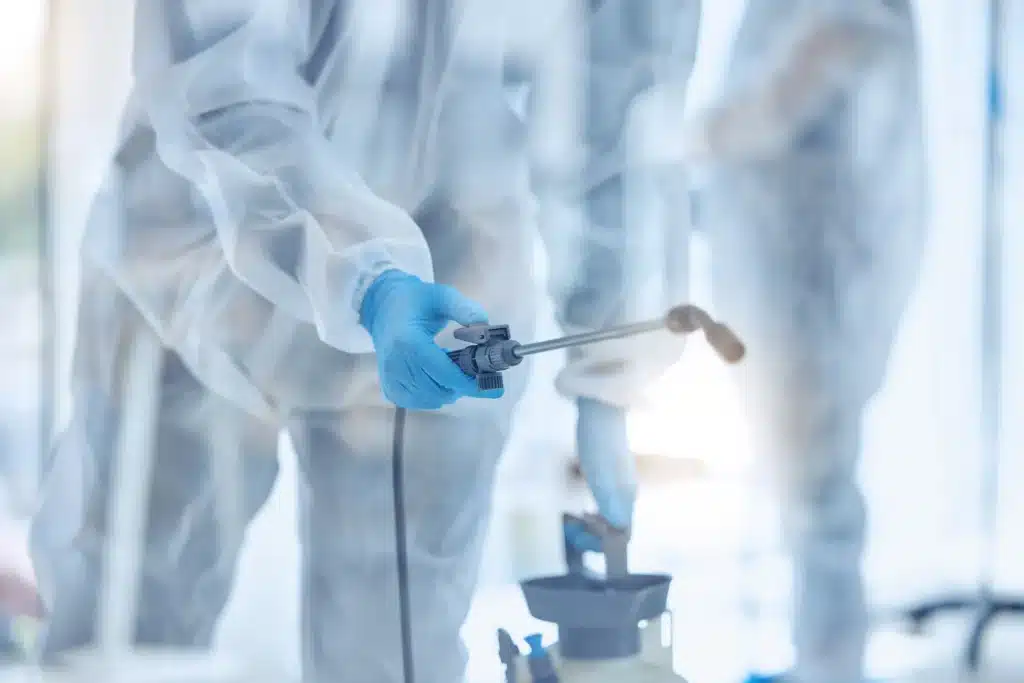
Disinfection achieves pathogen reduction on surfaces and medical instruments to a safe level. When a disinfectant is properly applied and allowed to sit for the recommended time, it will eliminate virtually all vegetative bacteria, most viruses, and fungi. However, disinfectants rarely can eliminate bacterial spores.
It is not a deficiency in disinfection that limits its effectiveness against spores. Rather, the inability of disinfectants to destroy spores is a deliberate design choice. For example, in cases where disinfection is used on surfaces, environmental equipment, and medical instruments that do not make direct contact with sterile tissue, eliminating spores is not always required. Disinfection is suitable for these applications if the proper concentration is used and the recommended contact time is followed.
The Three Levels of Disinfection
There are three recognized levels of disinfection:
Maximum Level
High-Level Disinfection (HLD)
High-level disinfection is the highest level of disinfection. It removes all microorganisms except high concentrations of bacterial spores. HLD is the minimum standard for semicritical medical devices – those that contact mucous membranes but do not contact sterile tissue. Glutaraldehyde, OPA, and hydrogen peroxide are examples of agents that can be used for HLD. The length of the contact time varies depending on the agent (from 8 minutes to 45 minutes) and the temperature (from 20°C to 25°C).
Middle Level
Intermediate-Level Disinfection
Intermediate-Level Disinfection kills mycobacteria, most viruses, vegetative bacteria, and fungi but does not remove spores. Tuberculocidal disinfectants, which are registered with the EPA, fall into this category and are used for surfaces and noncritical items with a known contamination risk.
Baseline Level
Low-Level Disinfection
Low-Level Disinfection removes most vegetative bacteria, some viruses, and some fungi. Low-Level Disinfection is suitable for noncritical items including blood pressure cuffs, stethoscopes, and exam tables. Quaternary ammonium compounds and diluted sodium hypochlorite are examples of agents that can be used for Low-Level Disinfection.
Sterilizing vs Disinfecting In HealthCare: 5 Critical Differences
The table below captures the core distinctions side by side:
| Factor | Sterilization | Disinfection |
|---|---|---|
| Kill level | 100% — all microorganisms including spores | ~99.9% — vegetative pathogens; spores survive |
| Spore destruction | Yes | No (HLD only partially) |
| Primary methods | Autoclave, ETO, hydrogen peroxide plasma | Chemical disinfectants, UV, pasteurization |
| Processing time | 15–60+ minutes depending on method | 1–45 minutes depending on level and agent |
| Required for | Critical items entering sterile tissue or bloodstream | Semicritical and noncritical items |
The Spaulding Classification System: Sterilization vs. Disinfection
Spaulding’s classification system is the model by which healthcare facilities determine the correct sterilization method for their medical equipment. It was developed by Dr. Earl Spaulding in 1968 and is a framework used by the Centers for Disease Control and Prevention (CDC), Food and Drug Administration (FDA) and Association for the Advancement of Medical Instrumentation (AAMI) today to categorize medical equipment according to its potential for causing infections.
1- Critical Equipment: Sterilization Only
Items considered “critical” enter a sterile environment or the patient’s vascular system. Therefore, the risk of infection with improperly sterilized critical equipment is directly related to serious outcomes such as: Bloodstream Infections, Surgical Site Infections, Septicemia.
Examples of Critical Equipment include: scalpels, forceps, surgical scissors, biopsy forceps, cardiac catheters, implantable devices, needles. Each of these must be sterilized, and high level disinfection cannot replace this process no matter how much time is available.
2- Semi-Critical Equipment: High Level Disinfection Required
Semi-critical equipment comes into contact with mucous membranes or non-intact skin but does not enter a sterile field. The minimum accepted level of disinfection for semi-critical equipment is high level disinfection, however sterilization is recommended if possible.
Examples of Semi-Critical Equipment include: flexible endoscopes, laryngoscopes, respiratory therapy equipment, anesthesia equipment, vaginal probes. Flexible endoscopes have caused the majority of hospital-acquired infection outbreaks due to unsterilized scopes. Therefore, high level disinfection is the minimum expectation, not the maximum.
3- Non-Critical Equipment: Low-Level Disinfection Satisfies
Non-critical equipment contacts only intact skin. Low-level disinfection is sufficient for non-critical equipment, and the transmission risk associated with this equipment is significantly less than that associated with critical or semi-critical equipment.
Examples of Non-Critical Equipment include: blood pressure cuffs, stethoscopes, bed pans, examination tables, bed rails. Do not underestimate the potential of non-critical equipment to harbor pathogens and transmit them to hands and then to patients.
Sterilization Using Steam (Autoclaving): The Most Widely Used Sterilization Process
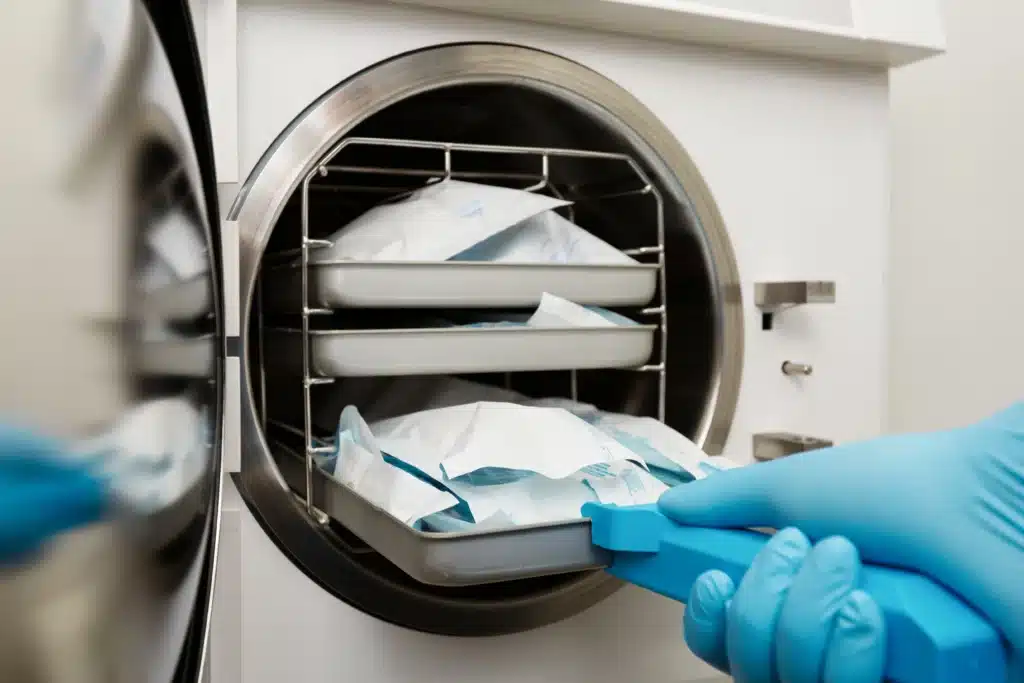
Steam is the predominant sterilization method used in healthcare facilities, offering many advantages: rapid processing, reliable results, nontoxic, well-documented efficacy, and relatively low cost for most heat-and-moisture tolerant instruments. Approximately 90 percent of hospitals worldwide rely upon some form of steam-based sterilizer.
How Steam Works
When moist heat under pressure is applied, proteins are denatured and cellular structure is destroyed. There is no chemical residue, therefore there is no need to aerate. Biological kill is consistent and predictable when four critical factors occur simultaneously.
The Four Conditions Which Must Exist at the Same Time
An autoclave cycle will fail when any one of the following parameters is absent or outside of established limits:
- Temperature: 121 °C (250 °F) for gravity displacement cycles, 132–134 °C (270–273 °F) for pre-vacuum cycles.
- Pressure: 15–20 psi above atmospheric, depending on cycle type.
- Time: At least 15 minutes at 121 °C; 3–4 minutes at 134 °C; additional time may be required for wrapped or complex loads.
- Quality of Steam: Must be saturated. Drying the steam reduces its ability to conduct heat effectively; excess moisture disrupts sterilization.
One of the most frequent reasons for autoclave failures is air pockets within the chamber. Air pockets act as insulation, preventing steam penetration into the load. Pre-vacuum sterilizers eliminate this problem through mechanical evacuation of air prior to steam introduction.
Biological and Chemical Indicators: Validating a Cycle
Completing a cycle in an autoclave does not mean the cycle was validated. The two are not synonymous.
Biological indicators (BIs) represent the most reliable method of validation. BIs contain spores of Geobacillus stearothermophilus — the most thermally resistant organism for sterilization testing. If the spores in a BI survive, it means none of the other microorganisms present would have survived. Regulated agencies mandate BI testing on a periodic basis.
Chemical indicators (CIs) — autoclave tape, indicator strips, Bowie-Dick test packs — change color when temperature and steam conditions are achieved. CIs provide assurance that the four critical parameters were satisfied during a cycle, but they do not validate sterility like BIs do. Both should be included in a comprehensive quality control program.
Chemical Disinfectants Used in Healthcare Settings
Different pathogens require different chemistry. All hospital-grade disinfectants should be EPA-registered and applied according to manufacturer instructions — including contact time, which is the most commonly violated parameter in practice.
| Agent | Effective Against | Typical Use |
|---|---|---|
| Sodium hypochlorite (bleach) | Bacteria, viruses, C. diff spores (at correct concentration) | Environmental surfaces, blood spills |
| 70% ethanol/isopropanol | Bacteria, viruses, fungi | Skin antisepsis, small surfaces |
| Hydrogen peroxide | Bacteria, viruses, fungi, some spores | HLD, environmental disinfection |
| Quaternary ammonium (quats) | Bacteria, some viruses, fungi | Noncritical surfaces, floors |
| Phenolics | Bacteria, some viruses | Environmental surfaces, labs |
| Peracetic acid | Bacteria, viruses, fungi, spores | HLD for endoscopes, surgical instruments |
Decontamination — the cleaning step prior to either process — is non-negotiable. Disinfecting and sterilizing will not function if there are organic soils present. Microorganisms have an additional layer of protection from heat, steam and chemical agents, as blood, tissue and biofilms shield the organisms from the processes.
Correct Order of Processing
Clean
Remove all visible organic matter using a detergent or enzymatic cleaner
Rinse
Remove cleaning agent and loosened debris from the surface
Dry
Excess moisture reduces effectiveness of disinfectants and impairs steam penetration
Sterilize or Disinfect
Apply the correct method per device classification
An instrument that appears to be clean is not always clean enough. Biofilm is particularly difficult to detect visually and very resistant to disinfectants once formed. Failure to perform this step is often due to lack of education in the cleaning process and is often one of the main reasons for re-processing failure – and one of the easiest ways to prevent it.
Most Common Errors Which Will Undermine Infection Prevention Programs
No disinfectant will compensate for the failure to properly process a critical item with the correct method.
Organic matter remaining on the surface will block active ingredients of disinfectants. Cleaning is part of the processing time, not just preparation for the process.
Sodium Hypochlorite at proper concentrations is required for C. difficile spores; Quaternary Ammonium compounds (quats) cannot effectively destroy C. difficile spores.
Failure to allow adequate contact time for the disinfectant/sterilant as indicated by the product label will result in reduced microbial kill.
Autoclave loads which are too dense or poorly packed may result in “cold spot” conditions within the load where sterilization does not occur.
Passing a sterilization cycle as indicated by the autoclave panel display does not ensure sterilization. Testing biological indicators is the only way to confirm sterilization occurred.
Concentration of active ingredient in disinfectants decreases over time. Expiration dates for disinfectants are important and must be followed.
Dilution errors (both under-diluting and over-diluting) reduce efficacy of disinfectants.
Regulations Applicable to All Healthcare Organizations
Requirements — Not Suggested:
- →CDC Guidelines for Disinfection and Sterilization in Healthcare Facilities — Original publication date was 2008, with subsequent updates through 2024, this document serves as the foundation for disinfection and sterilization practices.
- →FDA Regulations — All Medical Devices and Chemical Sterilizers must be FDA cleared; Manufacturer instructions for use (IFU) must be followed for each device and sterilizer used.
- →AAMI ST79 — Standard Technical Requirements for Steam Sterilization in Health Care Facilities; Equipment, Cycle Validation, Biological Testing and Documentation Requirements.
- →EPA Registration — All chemical disinfectants must be registered with the Environmental Protection Agency (EPA), for specific uses and against specific pathogens.
- →OSHA — Worker Safety Requirements for Handling Chemicals Used for Sterilization and Disinfection; Includes Exposure Limits for Ethylene Oxide and Glutaraldehyde.
Reasons Healthcare Organizations Use Commercial Sterilization and Disinfection Services
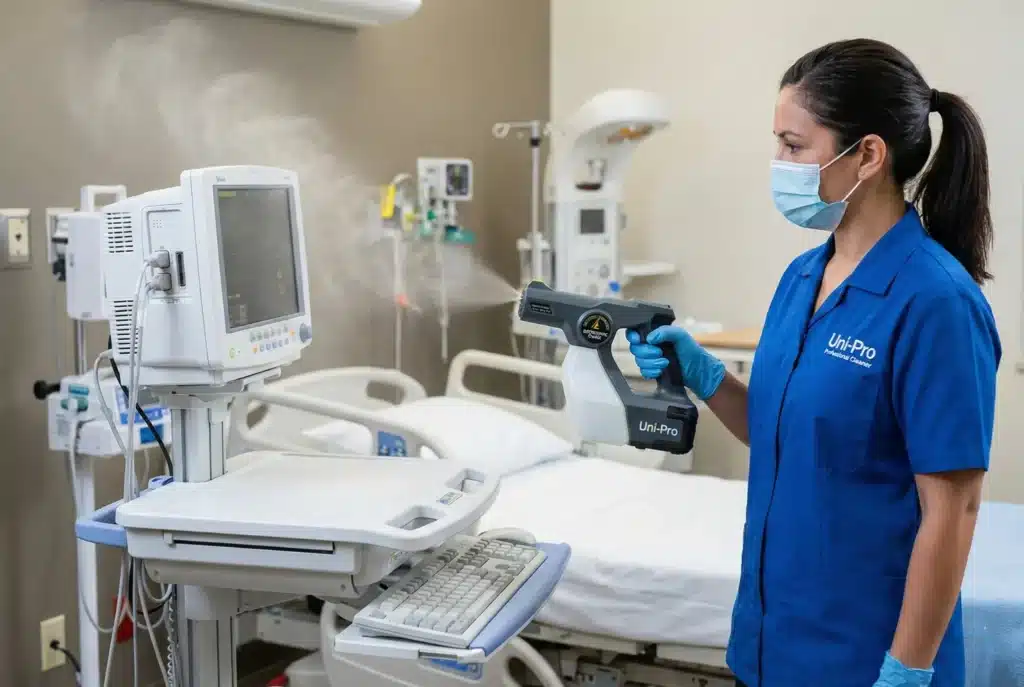
Sterile Processing Works When — Properly Staffed, Trained, Equipped and Documented. There Are Many Reasons to Fail Any of Those Requirements That Will Result in Compliance Risk and Patient Safety Exposure.
Commercial Sterilization and Disinfection Services Offer Infrastructure Most Healthcare Organizations Cannot Replicate Efficiently: Large, hospital-grade autoclaves with validated cycle protocols, Technicians Specifically Trained in Sterile Processing, Systematic Biological Indicator Programs, and Audit Trails to Support Regulatory Compliance Requirements.
Healthcare Offices, Outpatient Surgical Centers and Specialty Clinics Without a Central Sterile Supply Department Can Utilize Commercial Sterilization and Disinfection Services to Eliminate the Capital Expense of Maintaining that Infrastructure — And the Liability That Comes From Doing It Incorrectly.
UniPro offers medical cleaning services that meet current infection prevention guidelines, and follows CDC and AAMI standards, and provides documentation to support compliance review requirements. As a general guideline when selecting a medical cleaning service, see UniPro’s guide on how to select a medical cleaning service — it identifies key elements to consider and questions to ask.
Difference Between Sterilizing And Disinfecting
Sterilization involves eliminating all forms of bacteria, viruses, fungi and other contaminants from a surface using heat, chemicals or radiation. Disinfection is designed to kill bacteria, viruses and fungi but does not necessarily eliminate spore-forming bacteria such as Clostridioides difficile (C. diff).
A recent study published in the American Journal of Infection Control found that among 25 different disinfectants tested, none effectively killed C. diff spores. However, according to the Centers for Disease Control and Prevention (CDC), when used properly and at the proper concentration, bleach can be effective against C. diff spores.
However, there is a catch – many of the disinfectants commonly used in health care settings have not been proven to kill C. diff spores. Therefore, if your facility has experienced issues with C. diff infections, you should consider using a disinfectant specifically labeled as being effective against C. diff spores.
If you’re unsure whether you should be using sterilization or disinfection in your facility, follow these steps:
- 1
Determine which classification the equipment falls into. Critical Equipment: Enter sterile tissues or blood. Semicritical Equipment: Contact mucous membranes or non-intact skin. Non-Critical Equipment: Contact intact skin. Clean Equipment Only.
- 2
Identify the Process Needed for the Item. Critical Items Must Be Sterilized Using No Exceptions. Semicritical Items Require High-Level Disinfection At Minimum, Sterilization If Device Can Tolerate It. Non-Critical Items Require Low-Level Disinfection.
- 3
Choose the Appropriate Method. Use the Correct Method Based On The Device Material Compatibility And Pathogen Risk Profile. Follow Manufacturer Instructions For Contact Time, Temperature And Concentration.
- 4
Validate. For Sterilization: Use Biological Indicators And Chemical Indicators As Per Schedule. For Disinfection: Document Agent, Concentration, Lot Number, And Contact Time. Choose The Higher Level Of Processing If In Doubt.
Frequently Asked Questions
No. According to regulatory and clinical standards, critical instruments may not be substituted with disinfection when they enter sterile tissue or bloodstream. For semicritical items, high-level disinfection is the accepted minimum — sterilization remains the preferred option when the device allows it.
Standard disinfectants — including alcohols and most quaternary ammonium compounds — do not kill Clostridioides difficile spores. Sodium hypochlorite that has been registered with the Environmental Protection Agency (EPA) and used at the recommended concentration is the recommended agent for cleaning surfaces contaminated with C. diff spores. This is one of the clear examples of why matching the disinfectant to the specific pathogen matters.
Chemical indicators confirm basic steam conditions were present during the cycle. Biological indicators (vials containing Geobacillus stearothermophilus spores) are the definitive test. If those spores survived the cycle failed. Simply relying on the display on the autoclave cycle isn’t compliant with current standards.
Sanitizing reduces microbial counts to levels considered safe for food contact surfaces. Disinfection targets specific pathogens and achieves a higher kill level. In healthcare, sanitizing is not a substitute for disinfecting.
Yes, but rarely. Under certain circumstances such as when a highly resistant organism carrying patient comes into contact with the item or when the item contacts non-intact skin during care. The standard is low-level disinfection. However, clinical context may call for a higher level process.
Ensuring Patient Safety Through Proper Sterilization and Disinfection
The difference between sterilizing vs disinfecting is a patient safety decision made each time a medical instrument is reprocessed. Sterilization delivers a 100% kill rate — all microorganisms including spores. Disinfection kills most microorganisms, but spores are immune to its effects. Matching the right process to the right item, cleaning before processing, and validating that the process worked are the three key factors that support this system.
Healthcare facilities and medical offices in NYC that seek professional medical cleaning services and specialized cleaning and facility services that meet current infection control standards should reach out to UniPro to discuss their facility’s needs.
Ready to Meet Current Infection Control Standards?
UniPro offers medical cleaning services that follow CDC and AAMI standards, providing full documentation to support compliance review requirements.