
Medical cleaning is very different from janitorial service; it requires an understanding of how infectious diseases are spread and what needs to be done to prevent their spread. This is why it is so important to find a reputable medical cleaning company when searching for medical cleaning services in your area.
A quality Hospital cleaning service will provide knowledge about how to clean a medical facility and help protect patients and employees by reducing the risk of disease.
All healthcare cleaning companies should be certified to perform cleaning services at a hospital or medical facility. This certification requires a basic understanding of microbiology and infection control as well as the importance of cleaning a medical environment to protect patients and employees following infection Control Guidelines.
The ability to properly clean a medical facility and its equipment requires a level of knowledge that most janitorial companies do not possess. Specialized healthcare cleaning teams are a necessity for all medical facilities to ensure a safe and healthy environment for both employees and patients.
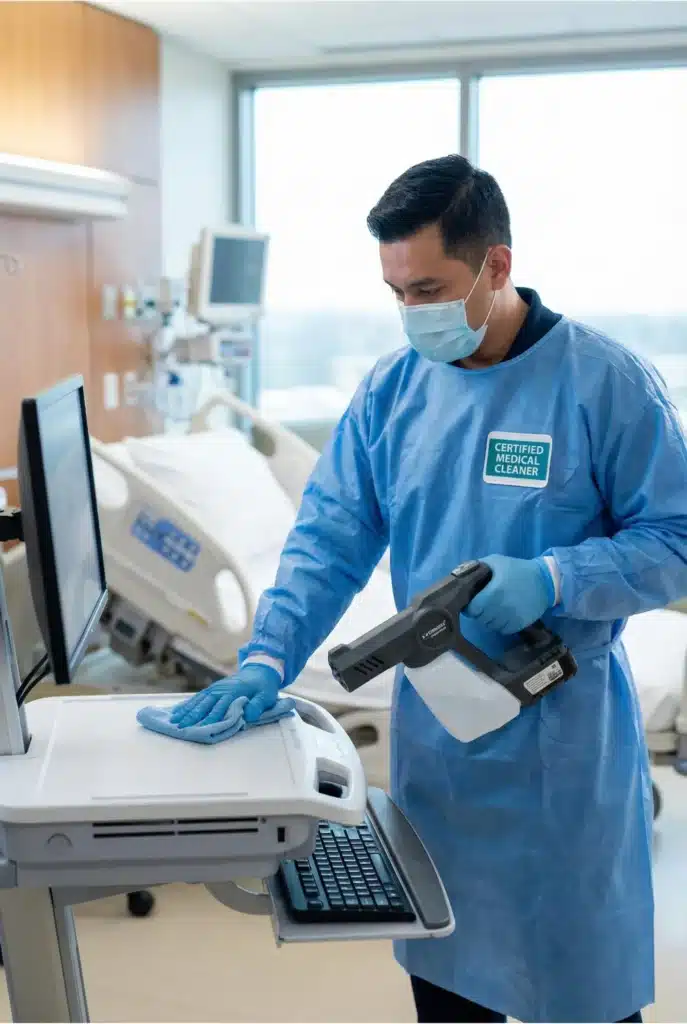
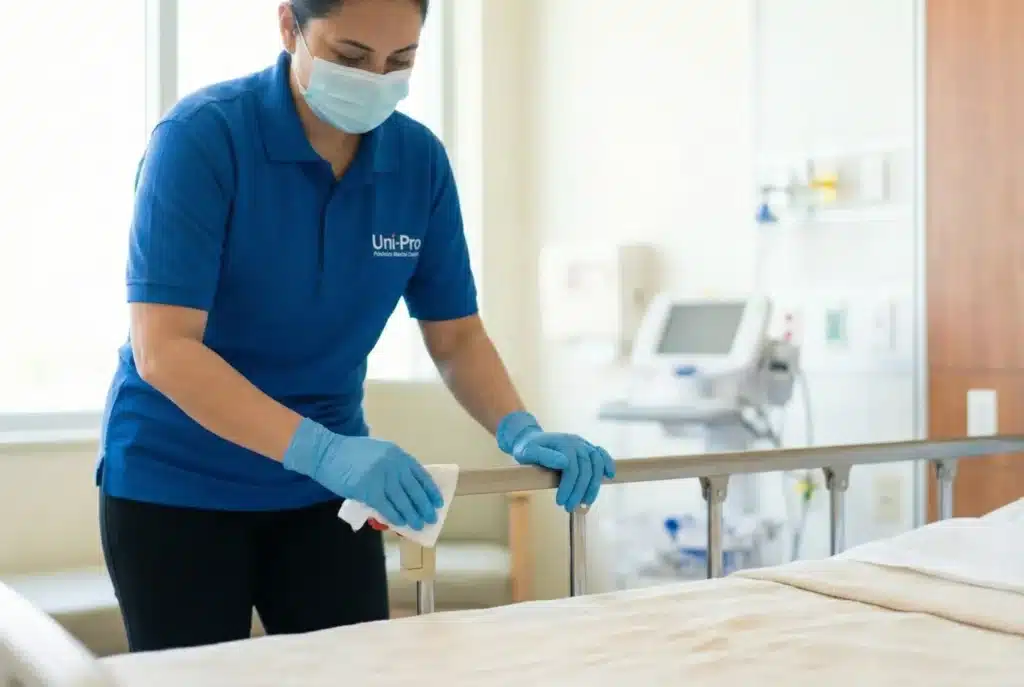
Critical Requirement: Medical office cleaning service requirements differ significantly from those for regular cleaning service applications. Medical cleaning requires attention to detail, reliability, and a clinical understanding that goes beyond basic cleaning service applications. In comparison to the typical commercial space, the stakes are much greater — an uncleaned high-touch area or incorrect application of a disinfectant could result in patient infection, regulatory infractions, and poor health care outcomes.
A medical center cleaning service understands the unique requirements of a clinical environment. Waiting rooms have different cleaning protocols than exam rooms. Surgical suite cleaning requires a sterilization technique understanding. Laboratory space cleaning requires a special chemicals knowledge base. That is why healthcare facilities should partner with a dedicated professional medical cleaning service as opposed to a general cleaning service.
There are many components that make a successful healthcare cleaning program, which distinguishes it from a regular cleaning service. Each element of the cleaning process must be guided by science-based protocols to ensure that each method used will effectively remove pathogens. A successful clinical cleaning team provides employees with education on infection prevention, regulatory compliance, and a clinical awareness of the facility.
The right products and equipment separate successful medical facility cleaning services from unsuccessful cleaning services. Hospital grade disinfectants, HEPA vacuum filters, and advanced technologies such as electrostatic sprayers are all examples of technology that are necessary to properly clean a facility and eliminate pathogens. A quality assurance program is also important because it provides a system to measure whether a healthcare cleaning service meets healthcare cleaning standards.
Approximately 1 out of every 31 hospitalized patients develops a HAI daily. Therefore, maintaining a strict level of environmental hygiene using a specialized healthcare cleaning provider is a critical component of the first line of defense against HAIs. When investing in a healthcare focused cleaning partner, you are directly improving patient safety and reducing unnecessary illness.
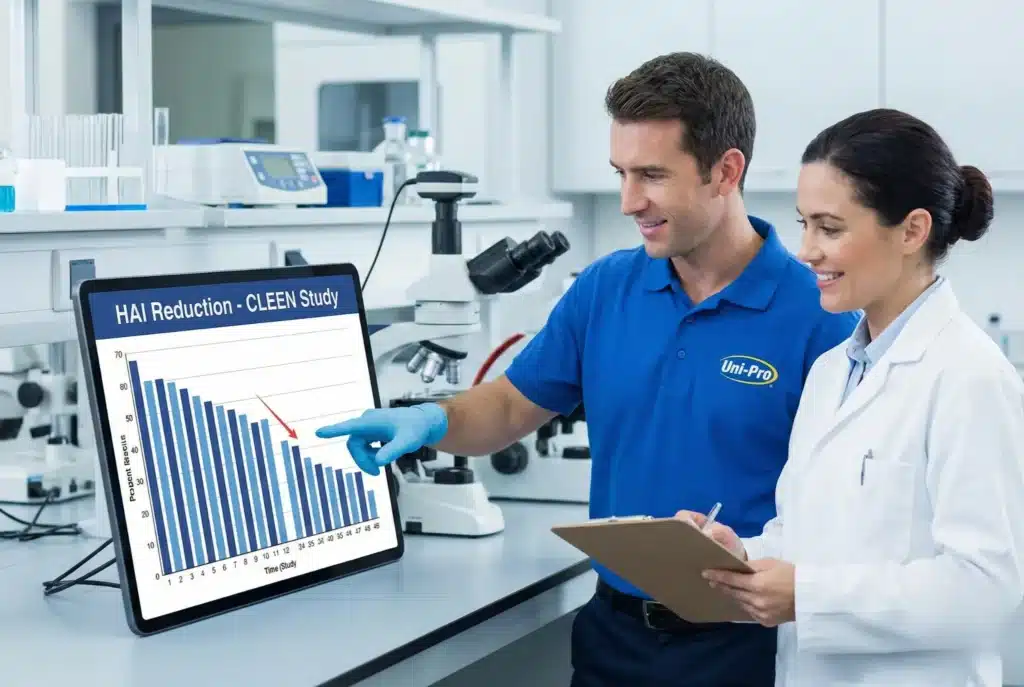
Research supports the importance of utilizing a dedicated healthcare facility cleaning provider. Research has shown that proper cleaning of commonly used medical equipment can reduce HAIs by 34.5%, which was demonstrated in the landmark CLEEN study. Clearly, there is more to a clinical grade cleaning service than providing a clean environment; they can save lives.
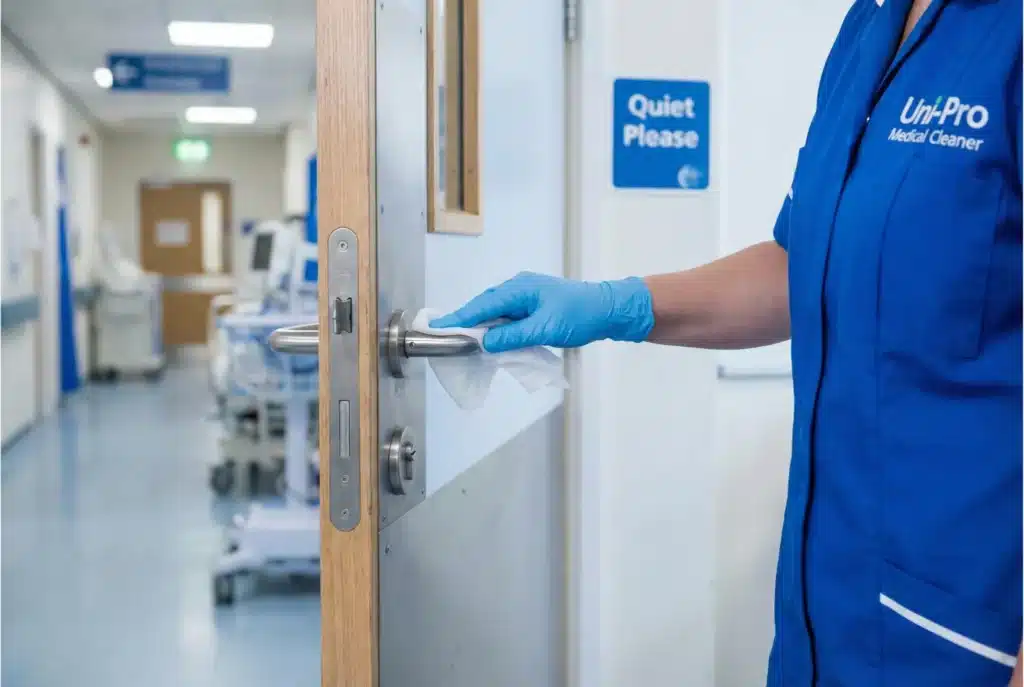
Cleaning services are often required to kill robust microorganisms such as Clostridium difficile, which can live on a surface for up to 5 months. Additionally, microorganisms such as Acinetobacter can remain alive in dust particles for years. Only a clinically trained cleaning team with the proper training can properly eliminate these pathogens.
Healthcare locations with diverse needs are supported through our clinical environment cleaning solutions. Each type of healthcare location has its own unique needs. For example:
Hospital and Surgical Center environments represent the most critical environments for the delivery of clinical cleaning support. These locations require daily terminal cleaning of surgical suites and sterile processing areas, which requires the expertise that only a trained healthcare sanitation provider with the appropriate experience and training offers.
Dental and Oral Surgery Office environments have their own unique issues related to bio-aerosol formation and non-disposable equipment use. Therefore, when dental offices look for professional dental cleaning services near me, they will be searching for a clinical cleaning provider that understands these specific types of contamination issues.
Urgent Care and Outpatient Clinic locations have the fastest rate of patient throughput, which creates an environment of rapidly changing rooms. Medical Janitorial Service Providers are needed to create efficient room reset procedures while maintaining the level of thoroughness necessary to assure the patient flow and infection control.
Each type of Specialized Medical Center; i.e., dialysis units, laboratories, pediatric offices, and assisted living facilities create their own unique risk of infections. Medical hygiene service providers must develop different methods of providing cleaning services for each of the unique settings’ regulatory requirements and patient populations.
Effective medical cleaning must follow established methods and techniques which consistently remove pathogenic organisms from surfaces at healthcare cleaning services.
The medical office cleaning company uses the mandatory “clean-then-disinfect” method in which organic materials are removed physically first. By removing organic materials prior to applying disinfectants, the disinfectants will be able to effectively kill the remaining pathogens. This process of using the “clean-then-disinfect” method is a significant difference between the healthcare-grade cleaning protocols provided by a medical hygiene service provider versus the cleaning services provided by a general cleaning service.
The healthcare cleaning company teams strictly follow the contact time recommended by the manufacturer of the disinfectant products used, usually 1 to 10 minutes depending upon the product. For effective surface disinfection, the surfaces must remain visibly wet during the dwell time. This level of attention to detail is what sets professional healthcare hygiene providers apart from those who do not have adequate experience.
Healthcare hygiene teams differentiate between routine daily cleaning of high touch point areas and visible soiling versus terminal cleaning of an area. Routine clinical environment cleaning is limited to cleaning high touch point areas and visible soiling. Terminal cleaning is an exhaustive, top-to-bottom complete disinfection of the entire area after a patient has been discharged or after an outbreak of infectious diseases.
A medical cleaning company must completely follow all of the provisions of OSHA’s Universal Precautions for handling all human blood and bodily fluids as potentially infectious. Following OSHA’s Bloodborne Pathogens Standard is a requirement for any legitimate medical cleaning agency.
Our medical facility cleaning service implements evidence based clinical practices for hand hygiene and environmental infection control. These clinical practice guidelines direct our frequency of cleaning, selection of cleaning products and standardize cleaning techniques used at all medical facilities we clean.
All of our healthcare disinfectants are EPA registered and suitable for a medical environment. We use List N products for SARS-CoV-2 effectiveness and List K products for the removal of C. difficile spores.
We have trained our clinical cleaning staff in HIPAA so they can protect your confidential health care information when working in sensitive clinical areas. This type of training differentiates us from general cleaning companies.
Healthcare sanitation providers utilizing advanced technologies enhance the overall effectiveness of eliminating pathogens through clinical cleaning protocols.
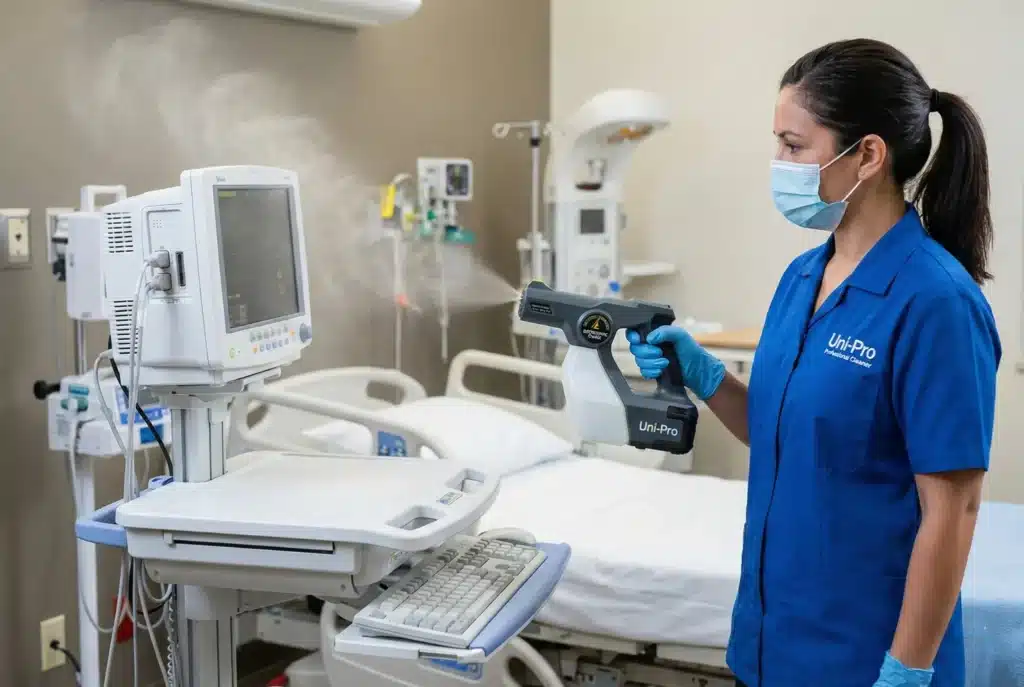
Electrostatic sprayers enable the application of an electrostatic charge to our disinfectant solutions. This enables the charged particles to wrap around and coat complex surfaces such as computer keyboards, hospital bed railings and medical monitoring equipment. It allows for effective disinfection of hard to reach areas.
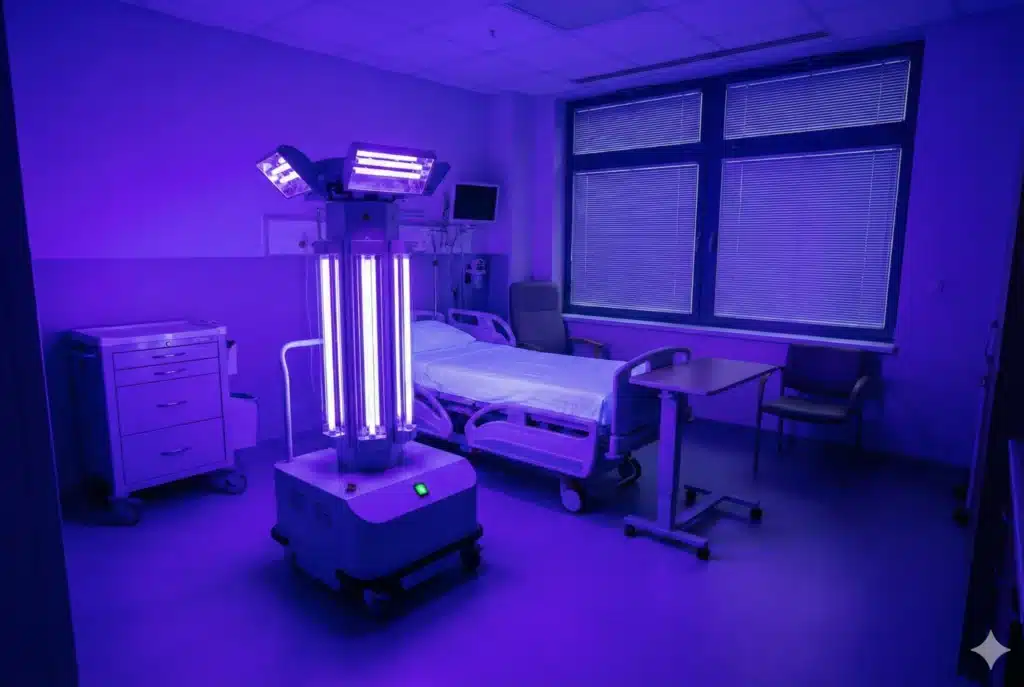
Ultraviolet light uses UV-C energy to damage the DNA of pathogens in areas where high levels of contamination are present. This technology is used in addition to chemical cleaning methods and represents another layer of protection against harmful pathogens for patients, visitors and employees. It also serves as another layer of protection in conjunction with traditional cleaning methods.
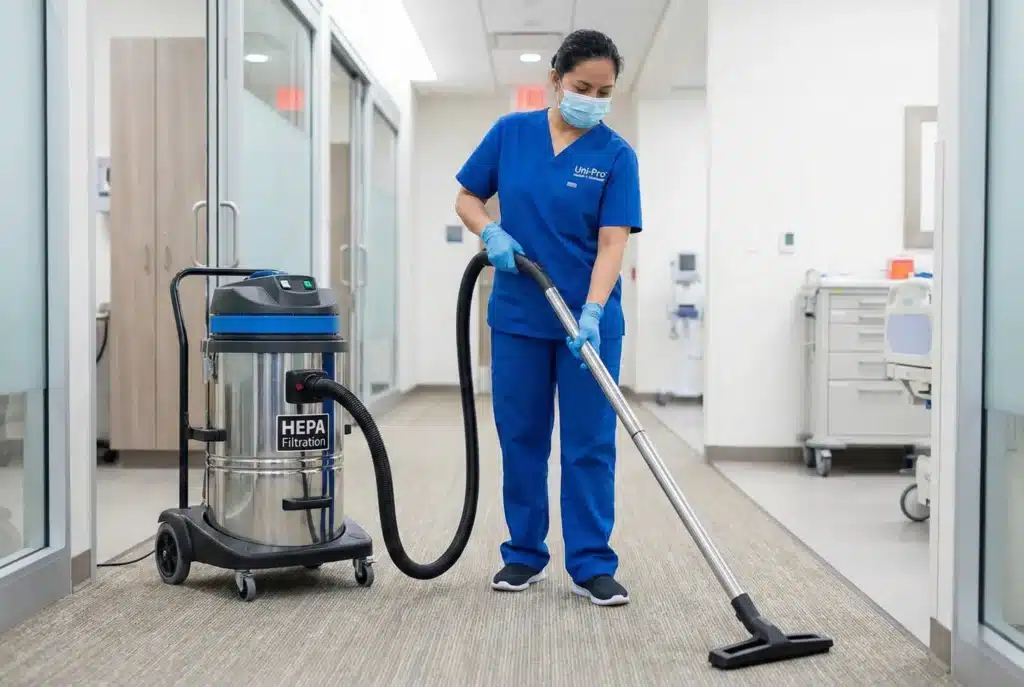
HEPA filtered vacuum systems capture 99.97% of particles that are 0.3 microns or smaller. This greatly reduces airborne particulate matter, including dust borne pathogens, which may be redistributed throughout a building after it has been cleaned.
Each member of our women owned medical cleaning company team holds recognized industry certifications attesting to their knowledge of healthcare environmental services and cleaning techniques.
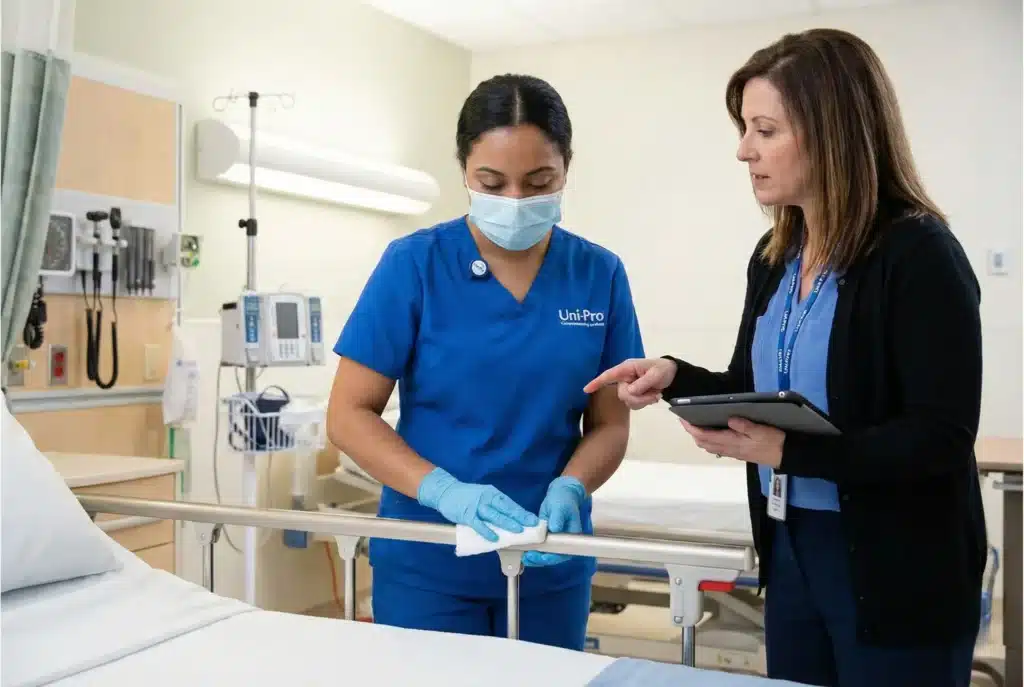
Employees who perform medical janitorial services are certified as CHESTs (Certified Health Care Environmental Services Technicians). They receive education and training in infection prevention and specific cleaning procedures that are required for clinical cleaning operations. CHEST certified technicians demonstrate understanding of their role in contributing to the clinical aspects of cleaning in a medical setting.
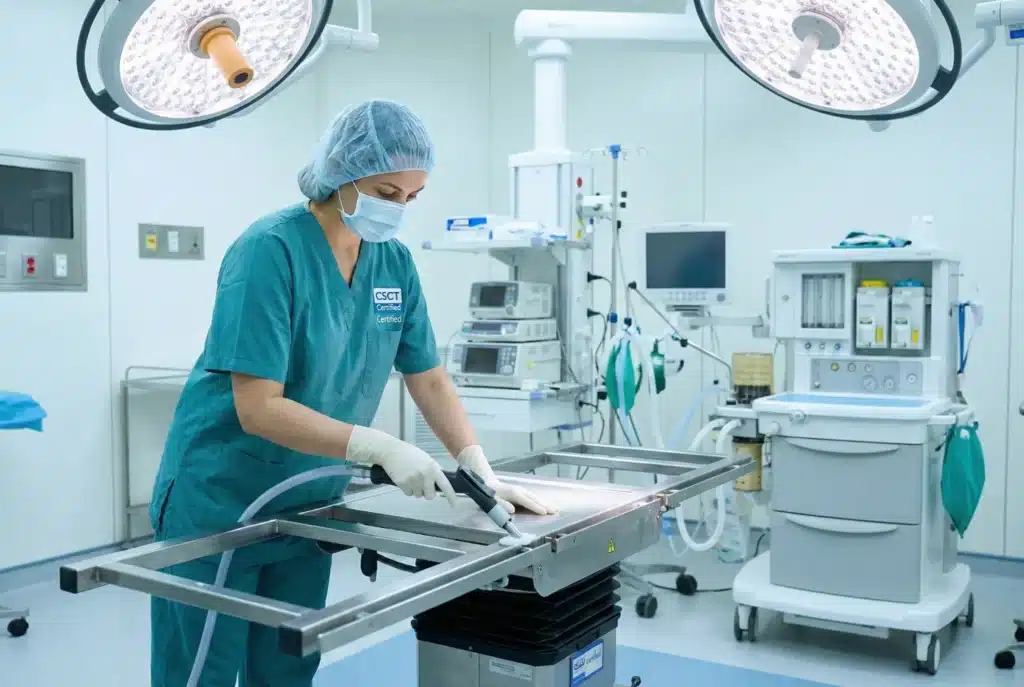
In order to maintain an Operating Room Suite (OR), our staff members require CSCT (Certified Surgical Cleaning Technician) certification. CSCT certification demonstrates their understanding of the stringent regulations that govern cleaning in OR settings and their commitment to delivering superior healthcare cleaning services.
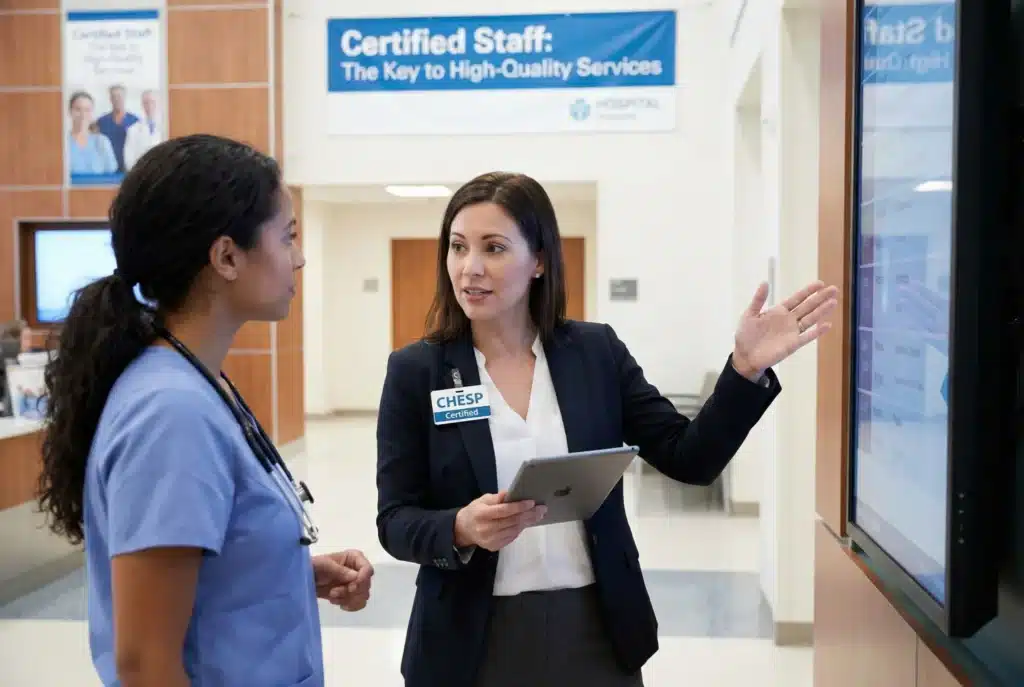
Our healthcare hygiene company management team is CHESP (Certified Healthcare Environmental Services Professional) certified. CHESP certification verifies their experience and skills as leaders in managing operations, ensuring regulatory compliance, and providing financial oversight in the delivery of high-quality clinical sanitation programs.
Objective verification systems allow us to measure the performance of our clinical hygiene operations against established standards.
All of our healthcare disinfectants are EPA registered and suitable for a medical environment. We use List N products for SARS-CoV-2 effectiveness and List K products for the removal of C. difficile spores.
Prevention of Cross Contamination Using Color Coding:
Our medical facility cleaning services employs a strict color coding system for our microfiber cloths. Red cloths are for bathrooms, blue for patient areas and other colors for other areas.
This color coding system helps prevent the spread of pathogens between various areas of a medical facility that we clean.
A quality professional healthcare cleaning service will have an upfront cost associated with the work they perform at your facility. However, it is essential to look at this as an investment versus a cost.
The cost of hiring a professional medical cleaning service can be calculated per square foot or by hours worked, but the actual cost may vary depending on the facility’s level of risk (based on type of services offered), how frequently the facility needs cleaned, and the level of disinfecting required to meet the facility’s regulatory compliance.
As you search for medical office cleaning services in your city consider the following:
Cost Versus Value: While there is certainly an upfront cost to hiring a healthcare grade cleaning provider, there are many additional benefits and values that these services offer.
In addition to the direct labor cost, a reputable healthcare cleaning service will help reduce the overhead of the facility; help manage human resource issues such as employee recruitment and retention; ensure that all necessary specialized equipment is available; provide expert advice on regulatory compliance related to medical cleaning; and provide liability protection for the facility via employee training.
Look for a medical cleaning company that employs certified technicians who have received training specifically in the area of healthcare cleaning. Some certifications that are specific to medical cleaning include CHEST, CSCT, and CHESP.
Select a healthcare cleaning company that understands OSHA, CDC, EPA, and HIPAA regulations as they apply to medical facility cleaning services. Only a few medical cleaning agency have the knowledge to meet the regulatory requirements of a medical facility.
Reputable medical janitorial services utilize high-tech cleaning equipment, such as electrostatic sprayers, UV-C systems, and HEPA vacuums, to show their commitment to quality and excellence in clinical hygiene practices.
Healthcare sanitation providers that are serious about providing quality clinical cleaning solutions use third-party verification systems, such as ATP testing, fluorescent marking, or other auditing systems, to measure the effectiveness of their cleaning.
Ask the medical cleaning provider for references from comparable facilities. If the company has a long history of working in your type of facility, they will likely be able to provide excellent service.
Each type of medical facility requires its own unique approach to clinical cleaning protocols.
Professional hospital janitorial services provide emergency response capabilities in case of an infectious disease outbreak:
The top medical cleaning companies will fully integrate health cleaning services into the overall patient safety program of the medical facility:
Reputable healthcare hygiene providers will participate in the facility’s Infection Control Committee and contribute the environmental hygiene perspective to the committee’s overall patient safety discussions.
The best clinical cleaning providers will track and report meaningful metrics, including HAI rates, cleaning verification scores, and regulatory compliance results, to prove the value of the cleaning services and to continually improve the cleaning process.
Top-tier medical facility cleaning services will provide education to clinical staff on the role of environmental hygiene in preventing infections and create partnerships with the clinical staff and the medical cleaning company to provide a safe environment for patients.
Quality professional healthcare cleaning companies combine the role of an environmental service provider within a total patient care program.
Collaboration With Infection Control Committees:
High-quality medical janitorial services contribute to facility-wide multidisciplinary safety programs through active participation in facility Infection Control Committees; providing environmental hygiene expertise to committee members.
Data Tracking and Reporting:
Leading professional medical office cleaning services track and report on various key metrics such as hospital-acquired infection (HAI) rates, cleaning verification scores and regulatory compliance performance. The data collected provides insight to the value that a healthcare cleaning company can provide to a client and supports ongoing quality improvement initiatives.
Education To Clinical Staff:
Top-ranked medical facility cleaning services educate clinical staff on how environmental hygiene plays a significant role in preventing infections; thereby promoting collaboration among healthcare providers and medical janitorial companies.
High touch areas and patient contact zones should be cleaned by professional medical office cleaning services multiple times per day or immediately after each patient visit. Daily cleaning services are usually required for waiting rooms, restrooms and administrative areas. Terminal cleaning takes place after a patient has been discharged or when contamination is suspected.
Certified staff who are trained in infection prevention; hospital-grade EPA registered disinfectants; adherence to applicable federal and state regulations (OSHA, CDC, HIPAA); use of scientifically supported cleaning methods and equipment; utilization of specialty equipment including electrostatic sprayers and UV-C systems, distinguish medical cleaning services from commercial cleaning services.
To locate a qualified medical cleaning company near you, verify certifications (CHEST, CSCT, CHESP); request references from similar healthcare organizations; determine if they have regulatory compliance knowledge; ask about verification systems they utilize (i.e. ATP testing); and evaluate their investments in healthcare-specific equipment and technology.
Healthcare cleaning services define these terms as follows: Cleaning removes visible dirt and organic debris using scrubbing and detergents. Sanitizing reduces pathogens to safe levels (99.9%). Disinfecting kills the identified pathogen(s) as listed on the product label, achieving a greater level of microbial kill. Both cleaning and disinfecting are typically necessary for medical facility cleaning to achieve effective infection control.
Medical cleaning companies follow established protocols for segregating, labeling and removing red bag waste and sharps containers. The staff at professional medical janitorial services receives training on the identification of different types of waste streams, the proper securing of those containers and coordination with licensed medical waste disposal services, while ensuring compliance with OSHA, EPA and state regulations.
Yes. Professional medical office cleaning services design cleaning schedules to minimize disruptions and accommodate flexible cleaning windows that allow them to clean during evening hours, between scheduled appointments or during downtime in the clinic. High-quality medical cleaning services support seamless clinical operations while maintaining high standards of infection control.
Medical cleaning services have expedited terminal cleaning response plans for infectious cases. Healthcare cleaning company teams will rapidly deploy to the area in question using appropriate PPE, specialized disinfectants and isolation room protocols to contain and eliminate the pathogens from spreading throughout the facility.
Multiple verification systems are implemented by professional healthcare cleaning services: ATP bioluminescence testing provides immediate and objective feedback regarding cleaning effectiveness; fluorescent marker audits to verify surface cleaning; color-coded microfiber systems to prevent cross-contamination; regular supervisory inspections; and detailed documentation of all medical facility cleaning services.
Uni-Pro provides specialized medical cleaning solutions for: